Aerate Soil In Potted Plants: How to Loosen Compacted Pots Without Damaging Roots
Why Aerating Potted Plant Soil Matters
If your potted plants seem slow to thrive, often the answer is compacted soil restricting air, water, and nutrient flow. Aerating soil in potted plants ensures healthy root growth, prevents waterlogging, and allows roots to breathe, giving your plants a much-needed vitality boost. Many plant lovers seek ways to loosen compacted pots naturally, but worry about harming roots. Thankfully, there are practical, gentle techniques to aerate soil effectively in containers without disturbing your plants’ delicate systems.
Signs of Compaction and Why It Happens
Compacted soil in potted plants can result from repeated watering, soil mix breakdown, or infrequent repotting. Signs include slow drainage, stunted growth, and roots circling at the bottom of the pot. Loosening the soil is essential, as continued compaction restricts water entry and suffocates roots, hampering plant health.
Frequent signs of compaction in pots involve hard, crusty surfaces or roots visibly pushed against the container’s edge. Water pooling on the surface, yellowing leaves, or fungus gnats can indicate poor aeration. Correcting this with careful soil aeration helps restore healthy gas exchange and drainage.
Beyond stunted growth, compaction increases the risk of overwatering and root rot. Addressing this not only benefits your plants but also ensures each watering session is more effective, as water and nutrients can reach the roots instead of running down the edge.
Understanding these warning signs equips you to act early, preventing damage before plants suffer. Catching compaction in its early stages makes the aeration process gentler and much more effective overall.
Simple DIY Methods to Aerate Soil Without Damaging Roots
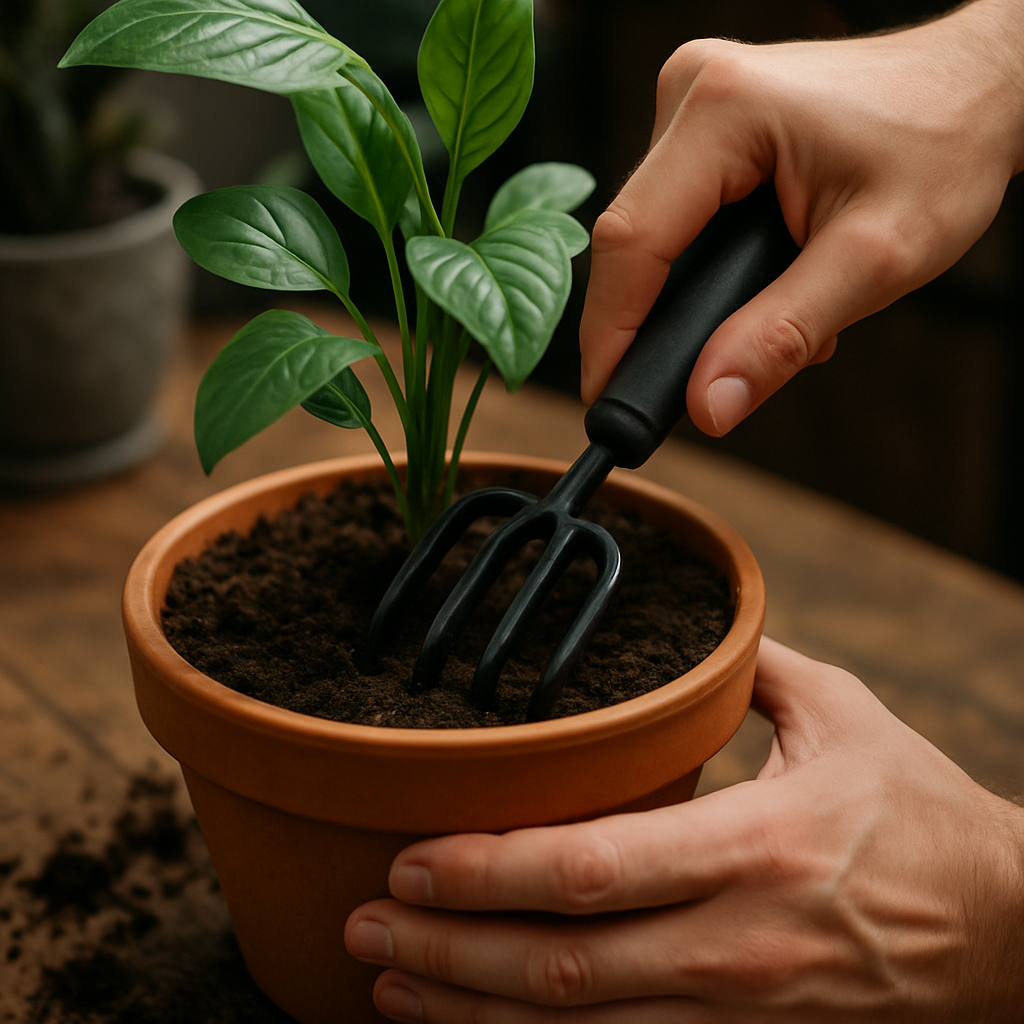
For potted plants, the best strategies are the least disruptive. Begin by using a thin, blunt wooden stick or a plant aerator tool to poke multiple shallow holes around the pot, avoiding the main root area. Gently wiggle the stick after insertion to open air channels, taking care not to force through dense root masses.
If you prefer an even softer approach, use a clean chopstick or bamboo skewer. Insert at a slight angle, about halfway between the plant stem and pot edge, and slowly rotate the stick in a small circle. This technique loosens soil pockets and enables better air flow without uprooting your plant.
- Repotting: When roots are tightly wound or visible atop the soil, carefully remove the plant from its container. Tease out root-bound areas by hand and shake off some old soil, then repot with a fresh, blended medium.
- Top-Dressing: Scrape away compacted topsoil and replace it with new, light potting mix or perlite to enhance surface aeration between waterings.
If using ready-made plant aerators, such as those made from plastic or ceramic, insert them following manufacturer instructions. These devices create permanent air channels and can be useful for larger pots or heavy-rooted plants.
Choosing the Right Materials for Natural Soil Aeration
Mixing perlite, pumice, or coarse sand into your potting soil prevents future compaction and allows long-term breathability. These amendments create pores for air and moisture, keeping the environment ideal for root development. Check that your blend has at least 20% perlite or another drainage aid, especially for plants susceptible to root rot.
Coconut coir and orchid bark are excellent natural ingredients that also maintain structure and drainage. Coco coir holds moisture without becoming dense, while bark chunks improve the air/water balance for epiphytic species and succulents. Avoid heavy garden soil, which compresses quickly in containers.
Pre-mixed potting soils labeled for container plants already incorporate perlite or vermiculite and can reduce the need for future interventions. Nevertheless, occasional top-dressing with lightweight materials helps maintain ongoing aeration.
When repotting, always loosen the old mix and blend fresh amendments evenly. Avoid packing down soil; gently tap the pot to settle roots, then water thoroughly to help new channels form naturally.
How Often to Loosen Compacted Soil in Pots
Monitor your potted plants seasonally; once every 3-4 months is usually enough for healthy plants. Heavier clay mixes or high-water houseplants may need more regular attention. If you frequently see standing water or suspect compacted roots, test the soil with a skewer monthly, and repeat aeration as needed.
Combined methods—like top-dressing one month and poking holes the next—help keep conditions optimal year-round. Infrequent but thorough interventions are better than overworking soil, which risks fine root damage and plant stress.
Major soil interventions, like full repotting or replacing the mix, are best timed for active growing periods when plants bounce back quickly from disruption. Some slow-growing species prefer minimal disturbance; for these, gentle surface aeration and top amendments are ideal.
The frequency of aeration also depends on environmental factors: drier homes, heated rooms, or rapid plant growth can increase compaction risk, so adjust your routine accordingly for best results.
Integrated Care: Watering, Drainage, and Ongoing Aeration
Aeration is only one part of maintaining vigorous, healthy potted plants. Always use well-draining pots and never allow excess water to sit at the base. Elevate containers with footed saucers to encourage air flow through bottom drainage holes.
When watering, add slowly and check for quick drainage. If water sits on the surface, pause and poke a few fresh holes around the sides. Use rainwater or filtered water to prevent mineral buildup, which can further contribute to compaction over time.
Learn from lawn care aeration methods, such as those explained by core aeration professionals, and adapt scaled-down versions for potted plant care. Regularly refresh the top layer of potting mix to reduce crusting and let roots access air consistently.
With these integrated practices, you can successfully keep potted plants healthy, roots oxygenated, and soil naturally loose all year long.


Comments
Post a Comment